Physician / Healthcare Professional
Physicians and healthcare professionals combine scientific thinking with careful observation and communication. They gather information, work within the limits of what is known, coordinate with a team, and take responsibility for people who are relying on them.
Best explored around ages 13–17
What physicians actually do
A closer look at the real work, day to day.
- Listen carefully to understand a situation
- Observe and gather relevant information
- Think through possibilities using science
- Recognize the limits of what is known
- Communicate clearly with people and families
- Coordinate with a wider care team
- Keep careful, accurate records
- Keep learning as knowledge changes
- Take responsibility for decisions and follow-up
Typical tasks
- Review information about a situation
- Ask careful questions
- Observe changes over time
- Explain something clearly to a family
- Coordinate with a team
- Document accurately
- Follow up on a plan
What this kind of work can involve
These describe the work itself — not a personality type or who belongs in it.
Scientific thinking
Careful observation
Clear communication
Empathy
Responsibility
Teamwork
Working within the limits of knowledge
Common misconceptions
Myth
Healthcare is one job.
Reality
It is a huge range of roles — physicians, nurses, technicians, therapists, researchers and public-health workers — each with different day-to-day work.
Myth
You have to know everything.
Reality
A big part of the work is knowing how to find information, ask good questions, and work within the limits of current knowledge.
Myth
It is all dramatic emergencies.
Reality
Much of the work is steady observation, communication, prevention and coordinated teamwork.
Help a Community Health Team
A fictional community health team is preparing a family education guide. Help review it — separate facts from assumptions, ask useful questions, evaluate sources, choose what belongs, write clearly, and recognize when a qualified professional is needed. You never diagnose or give medical advice.
About how long
30–45 min
The themes it touches
Observation · Source literacy · Communication
What the mission involves
- separating observations from assumptions
- asking useful, appropriate questions
- evaluating whether sources are reliable
- communicating clearly and responsibly
- recognizing the limits of what the team can answer
Afterwards, you'd reflect on questions like
- “Do you enjoy observing carefully and noticing details?”
- “Do you like explaining something clearly so someone understands it?”
- “Are you interested in how the body and science connect?”
- “Do you find working as part of a team meaningful?”
These are for reflection only. There are no right answers, no score, and nothing that labels you.
A parent signs in and approves the session before the mission begins.
Career access is included with paid Family Premium — $9.99/month or $79.99/year, per family.
Design a Family Health Education Guide
If the mission clicked, this is a longer project where you research, write and improve a real family health guide from scratch. It takes more time and asks more of you — that’s the point.
About how long
2–5 hours · done across several sittings
How it's different from the mission
You weigh which sources to trust, write the whole guide, check which claims are responsible, and improve it — not just one guided task.
What the project involves
- Weigh prepared sources and decide which ones to trust
- Write clear sections for a specific reader and goal
- Sort claims by how responsible they are to make
- Add an expert-review note, then review and improve the guide
A parent sets up the session, just like a mission. There's no score or grade — finishing the build and reflecting on it is what matters. Your work stays private to your family.
Career access is included with paid Family Premium — $9.99/month or $79.99/year, per family.
Where and how they work
Careers are not isolated job titles — the setting, people and tools vary widely.
Where and how they work
- Hospitals
- Clinics
- Community health centers
- Public health organizations
- Research institutions
- Universities
- Emergency and urgent care
Who they work with
- Nurses
- Other physicians
- Technicians and therapists
- Patients and families
- Public-health teams
- Researchers
Tools they may use
- Medical records systems
- Diagnostic and monitoring equipment
- Reference and research databases
- Communication and scheduling tools
- Lab and imaging services
Skills that come up
These are related skills and subjects — not a checklist you need to master to belong here.
Skills involved
- Scientific reasoning
- Observation
- Communication
- Empathy
- Responsibility
- Teamwork
- Continuous learning
Related school subjects
- Biology
- Chemistry
- Health science
- Psychology
- Communication
How people get into this work
Paths into healthcare vary widely by role and country, and can involve university study, professional or technical programs, clinical training, and supervised experience. Different roles require very different amounts of training.
An honest picture
The parts that can be hard
Every kind of work has friction. Knowing it up front is part of exploring honestly.
- Making careful decisions with incomplete information
- Communicating difficult news with care
- Long training for some roles
- Emotional weight of responsibility
- Keeping up as knowledge changes
Try it in real life
Activities that touch this kind of work
These are real activities from RungMark's discovery library — a low-stakes way to see if the work feels interesting.
 STEM
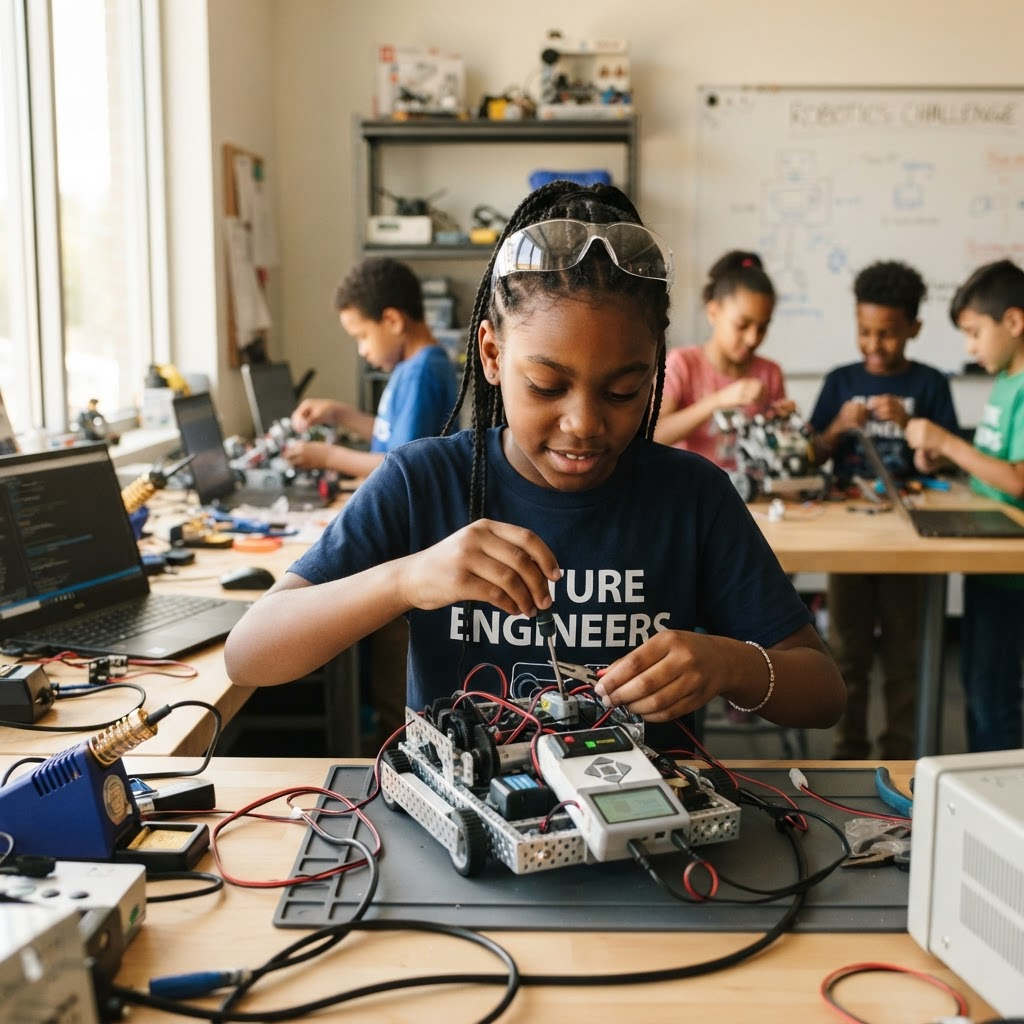
STEMBuild & Battle Robotics
North Dallas Robotics Lab
Build a working robot, test designs and compete in friendly challenges.
 STEM
STEMLittle Scientists Lab
Frisco Discovery Center
Playful hands-on experiments that spark early curiosity about how things work.
Exploring alongside a child
When you have an account, career curiosity connects to your child’s Growth journey: reflections on activities they actually try, so patterns emerge honestly over time.
Where this comes from
This overview is written and reviewed by the RungMark team to stay balanced and current. It focuses on the nature of the work rather than any single employer or path.
- RungMark editorial review (illustrative mock content) — Mock placeholder — public occupational descriptions to be cited before publication.
Last reviewed August 2026
Keep exploring
Other kinds of work to look at
Exploring widely is the point. There's no wrong direction here.
Software Developer
Design, build, test and improve digital products that solve real problems.
Common work
- Solving unclear problems
- Creating something that works
- Testing and improving ideas
- Working independently
Mission: Fix the School Club App
Digital Content Creator
Plan, produce and improve content that reaches and helps a specific audience.
Common work
- Understanding an audience
- Turning an idea into a clear message
- Producing something on a schedule
- Editing and refining work
Mission: Create a Campaign for a Community Event